
Shelby County Criminal Court Cases
Shelby County belongs to Illinois's Fourth Judicial Circuit and Fifth Appellate District. The Circuit Court at 301 E. Main Street in Shelbyville hears felony and misdemeanor cases filed here. Illinois does not place local felonies with a district clerk and misdemeanors with a separate county clerk. The Shelby County Circuit Clerk maintains both types of criminal case files, along with traffic or ordinance matters filed in circuit court. The docket or citation identifies the actual venue.
The court file begins after the State's Attorney files a complaint, information, or indictment. It can then collect appearances, motions, hearing entries, orders, a plea or trial result, judgment, sentence, and financial assessments. The Circuit Clerk is the custodian. The Sheriff may hold an arrest report or booking record, but that material is not a substitute for the filed Shelby County criminal court case.
Fourth Circuit Court Roles
Three offices can touch the same Shelby County criminal case without doing the same job. The State's Attorney reviews law-enforcement referrals and prosecutes charges. The Public Defender may represent a person after appointment by the court. The Circuit Clerk receives filings and maintains the docket and case documents. Court questions should therefore go to the office that owns the issue, not simply to the first courthouse number found.
The Shelby County Public Defender source shows the local defense office connected to these proceedings.
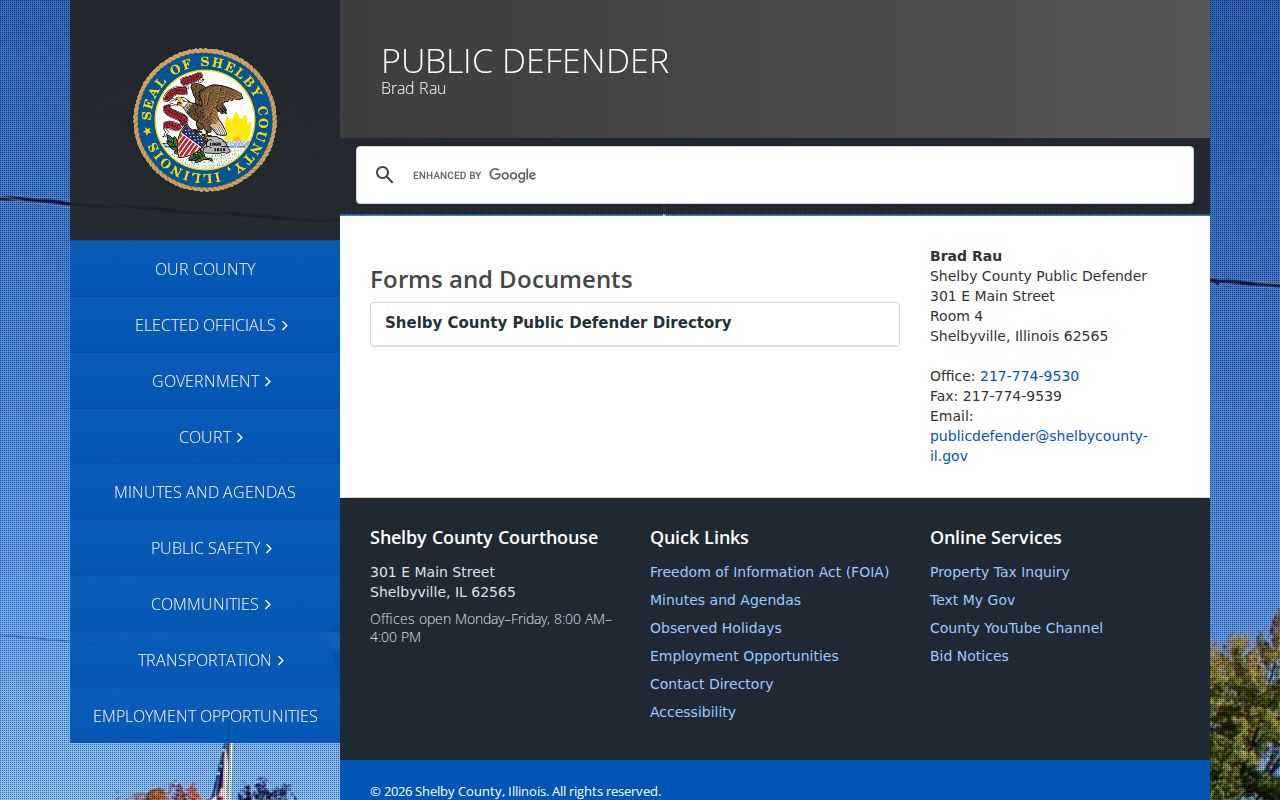
The image helps distinguish defense representation from custody of the Shelby County court file, which stays with the Circuit Clerk.
Search Shelby County Case Records
The county clerk and Illinois Courts directory link to Judici as Shelby County's public online route. Judici reports that Shelby criminal and civil records are current from 1988. A single-court search is free, while premium tools and document access differ. Follow this sequence:
- Open the Circuit Clerk's official Judici link and select Shelby County.
- Use the exact case number when known, or search a carefully matched name.
- Compare filing year, case type, and other offered facts before choosing a result.
- Read the docket in date order from filing through disposition and sentence.
- Ask the clerk for missing documents, older files, or plain or certified copies.
| Judici control | Type | Use | Important limit |
|---|---|---|---|
| Court | Dropdown | Select Shelby County | Needed for a single-court search |
| Search cases | Action | Open public search | Dynamic options can change |
| Case number | Text | Best exact key | Enter the full known number |
| Name | Text | Alternative key | Common names may collide |
| Plea/Pay | Action | Eligible matters only | Not a full history search |
The official Judici source illustrates the participating-county search entry point.
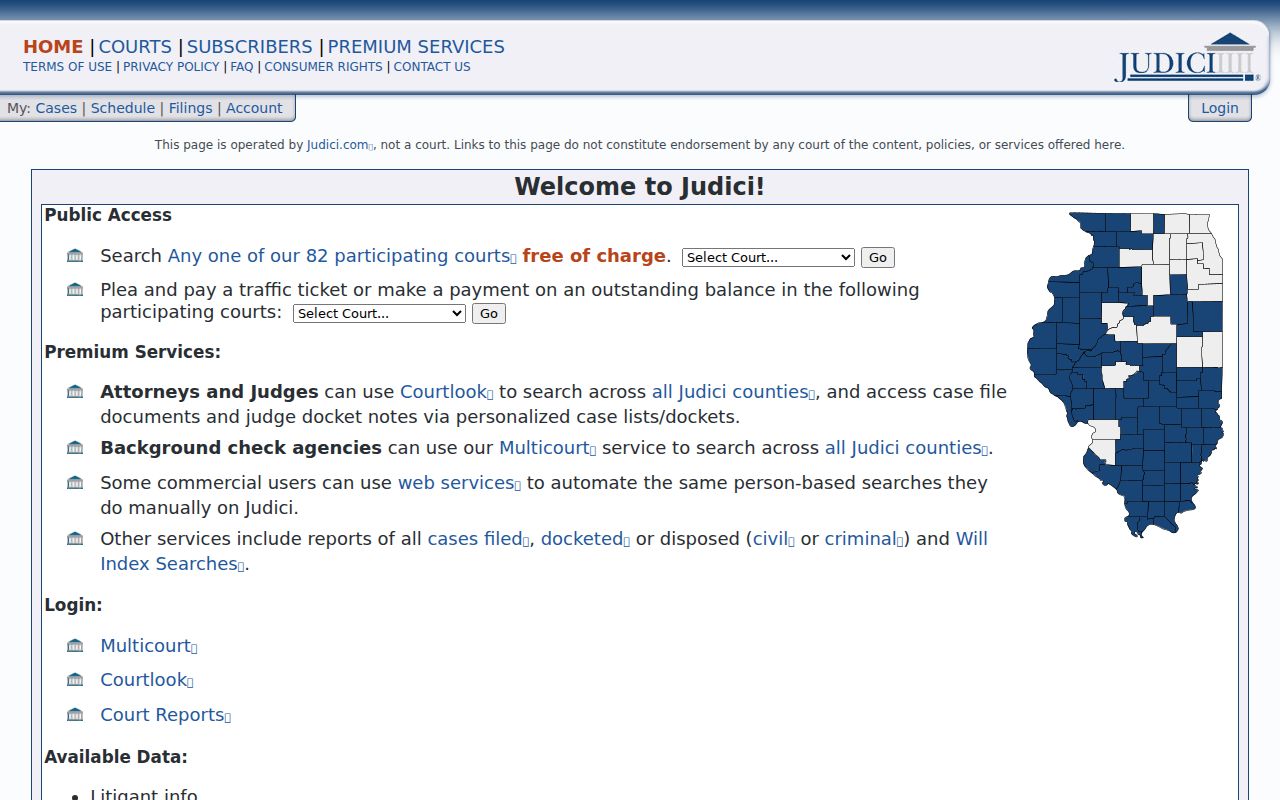
This screen is the online index layer; it does not guarantee that each filed document is visible.
Shelby Clerk Fallback
When Judici is not enough, contact the Circuit Clerk on the courthouse third floor, Room 1, at 301 E. Main Street, Shelbyville, IL 62565. The mailing address is P.O. Box 469. The phone is 217-774-4212, fax 217-774-4109, and email cc1@shelbycounty-il.gov. Ask about inspection, a plain copy, or a certified copy and provide the case number plus the document or docket date sought. The county publishes no current copy or certification fee schedule, so confirm cost and payment method rather than assuming an amount.
Files before Judici's 1988 coverage date may need a staff search or archive retrieval. Recently filed events can also lag online. The Circuit Clerk source is the direct local contact and online-record gateway.
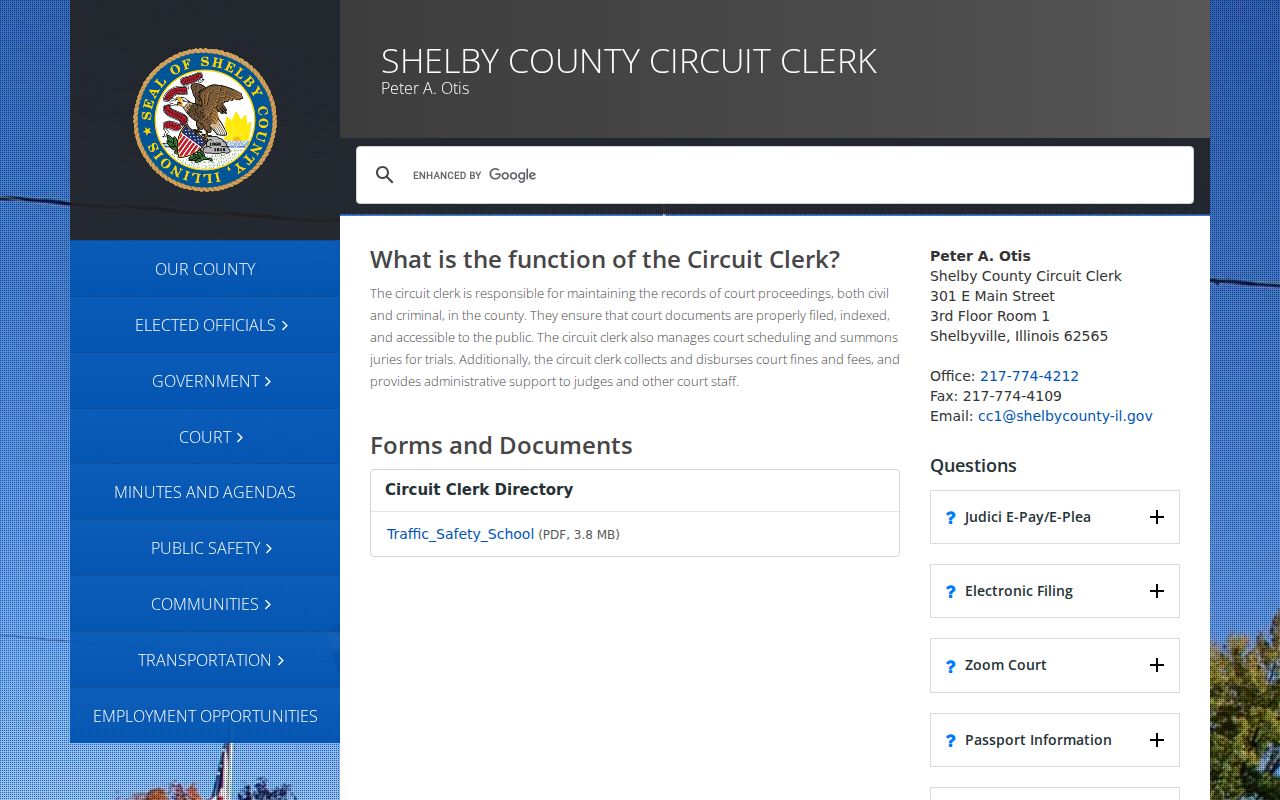
The captured page reinforces why clerk contact is the right fallback for the authoritative Shelby County criminal case file.
Shelby E-Pay and E-Plea Limits
Judici's payment features serve narrower tasks than the Shelby County criminal case search. The Circuit Clerk says E-Pay applies to closed cases that still have an outstanding balance. E-Plea covers most minor traffic and conservation offenses when the ticket says no court appearance is required. Neither feature is a broad criminal-history product, and neither proves that a person has no other case. Begin with the case search when the goal is to read a docket.
Payment eligibility also should not be confused with a disposition. Check the docket entry and judgment to learn how each count ended. If an online balance or plea option seems inconsistent with the file, give the clerk the case number and ask which court order controls. That small check avoids turning a service button into an unsupported conclusion about a Shelby County criminal case.
Shelby Criminal Case File Contents
A public docket is an event index, while a file can hold the papers behind those events. Availability varies, and public electronic users should not assume access to images, judge notes, birth dates, victim identifiers, warrants, or detailed conditions. Use the docket to identify what exists, then ask the clerk about the exact item.
| Case number and court | Identifies the Shelby County proceeding and filing venue. |
|---|---|
| Charging document | States the filed allegation in a complaint, information, or indictment. |
| Docket entries | Chronological record of filings, appearances, motions, hearings, and orders. |
| Hearing dates | Past and scheduled events, subject to court change. |
| Disposition and judgment | Shows whether a count was dismissed, remained pending, or ended in judgment. |
| Sentence and assessments | Records the court's sentence and published financial balance information. |
A caption or charge alone does not prove guilt. Identity also needs care. Match more than a name before treating a result as the correct person.
Reading Shelby Docket Outcomes
Read the Shelby County docket from oldest to newest. A complaint marks an accusation, not a conviction. “Pending” means the case has not reached a final disposition. “Dismissed” means prosecution ended without conviction on that count, but dismissal is not the same as expungement. A guilty finding or judgment of conviction is a disposition. Charges can be amended, reduced, separated, or resolved differently from the initial arrest entry.
This distinction matters because Illinois State Police conviction information, a jail booking, and the Shelby County court docket answer different questions. The fuller route from arrest to filed charges appears in the county's arrest history process. For a court outcome, the Circuit Clerk docket and judgment control over an earlier booking label.
Shelby County Criminal Case Stages
A case does not always follow every possible path, but the docket generally moves through a recognizable sequence. The State's Attorney first files charges. The court conducts an initial appearance or arraignment, then manages disclosure, motions, and other pretrial work. A negotiated plea or trial resolves the filed counts. The court enters the disposition and, after a conviction, imposes sentence and conditions.
Case flow: Charges Filed › Arraignment › Pretrial › Plea or Trial › Disposition › Sentencing
Illinois's pretrial system changed under the SAFE-T Act, so old cash-bail assumptions should not be applied to a current docket. Read the actual release or detention order. The clerk also publishes remote hearing information, but Zoom identifiers are attendance tools, not court-record searches. A litigant should confirm that remote attendance is allowed for the assigned date and judge.
Shelby and Federal Court Records
A Shelby County prosecution belongs in the Illinois Circuit Court. A federal prosecution is separate and may be filed in the U.S. District Court for the Southern District of Illinois, which covers Shelby County. Do not search Judici for a federal docket. Federal cases use PACER, while state and county proceedings use Judici and the local clerk.
The PACER source shows the federal account and docket gateway.
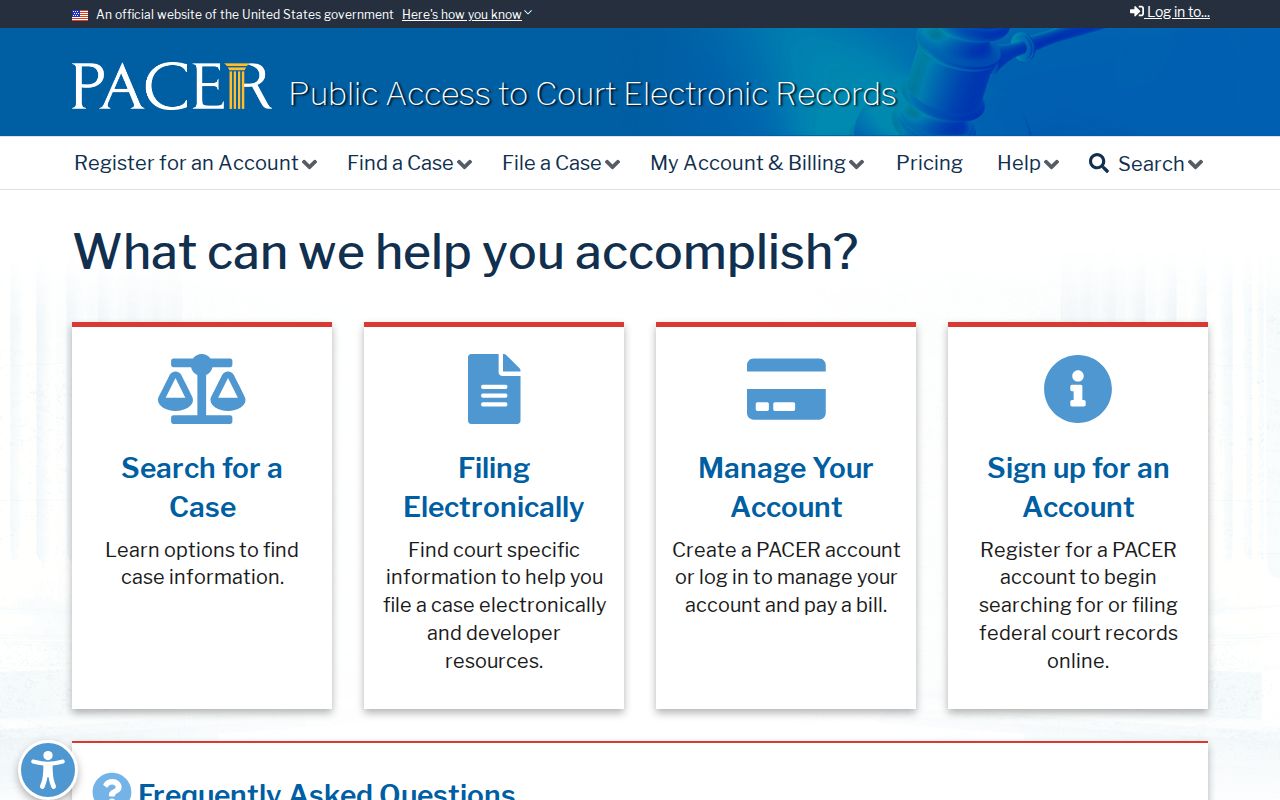
This separate portal demonstrates the jurisdiction line between federal records and Shelby County criminal court cases.
The Southern District of Illinois source identifies the federal trial court serving this region.
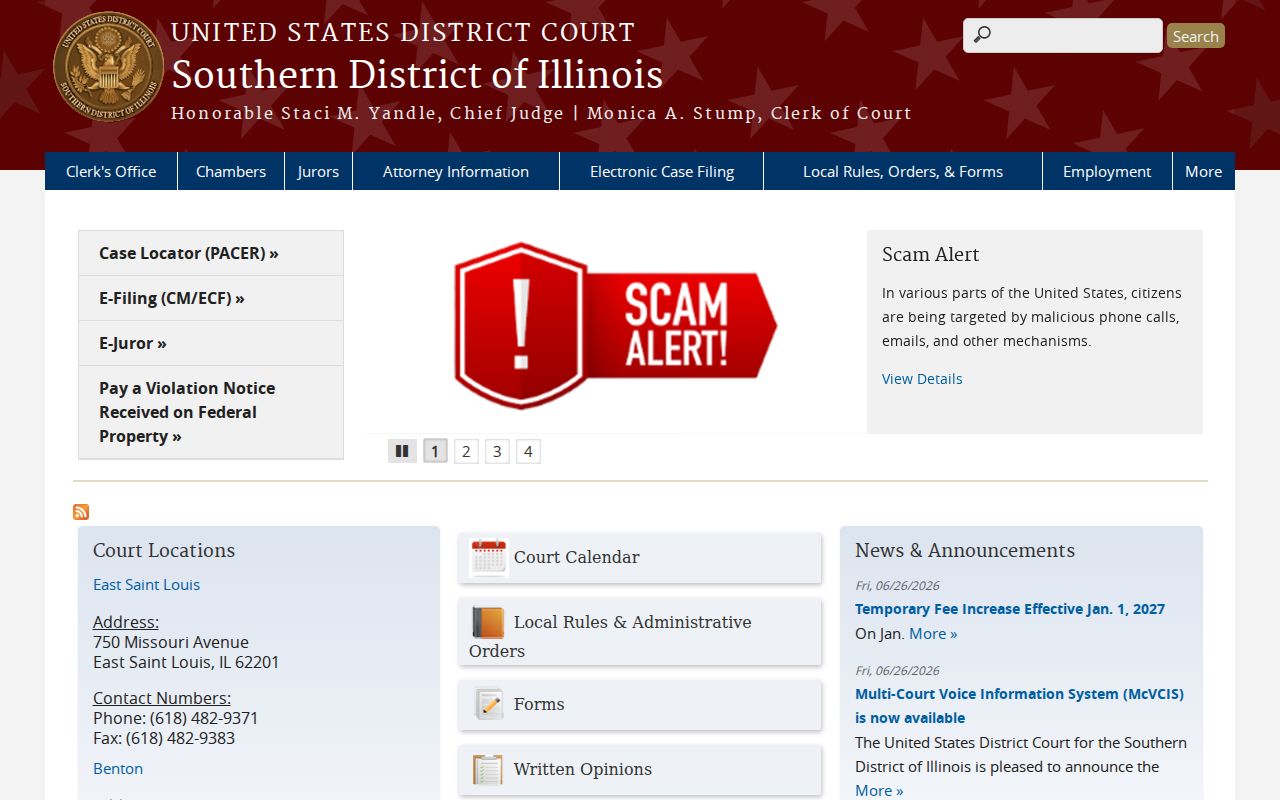
The district page should be used only when the matter is federal, not as another route to a Shelby Circuit Court file.
Shelby Case Access Restrictions
The Circuit Clerk states that court records and files are public except juvenile, adoption, impounded, and sealed records. Court access is not handled through a county FOIA request. The judicial branch is excluded from the Illinois Freedom of Information Act definition of a public body, so pleadings, judgments, and docket copies must be requested through court procedures.
If a Shelby County case does not appear, verify the spelling, court selection, filing year, and case number. Then ask the clerk whether it predates online coverage, is too new for the feed, or has a restricted status. Staff cannot release a sealed or impounded file without legal authority. Expungement generally removes or destroys eligible records as an order directs, while sealing restricts ordinary public view but preserves authorized access. A missing public result alone does not establish which reason applies.