
How to Check Criminal History in Shelby County
Start with the record closest to the question. For a filed Shelby County criminal case, use the Circuit Clerk's official Online Records link to Judici. For current local custody, call the Shelby County Sheriff's Office because its official site does not publish a live jail roster. Ask the police agency that investigated an event for its incident report. Use Illinois State Police for a state conviction response or for fingerprint-based review of your own Illinois record.
Gather the full name, spelling variants, approximate event date, and date of birth when the office permits it. A case number is the strongest court key. A report or booking number helps an agency locate its own file. Compare the court, filing date, charge, and outcome rather than treating a shared name as proof of identity.
- Identify whether the goal is a court outcome, arrest report, booking status, state history, warrant, or registry record.
- Search the official online channel when one exists. Select Shelby County on Judici and use the full case number when known.
- Read dates, agency names, and docket events in order. Initial charges may not match the final judgment.
- Call the Circuit Clerk or Sheriff when the online result is absent, incomplete, too recent, or outside online coverage.
- Request a plain or certified copy from the office that owns the source record when formal proof is needed.
The Shelby County government gateway helps route a request to the correct local office.
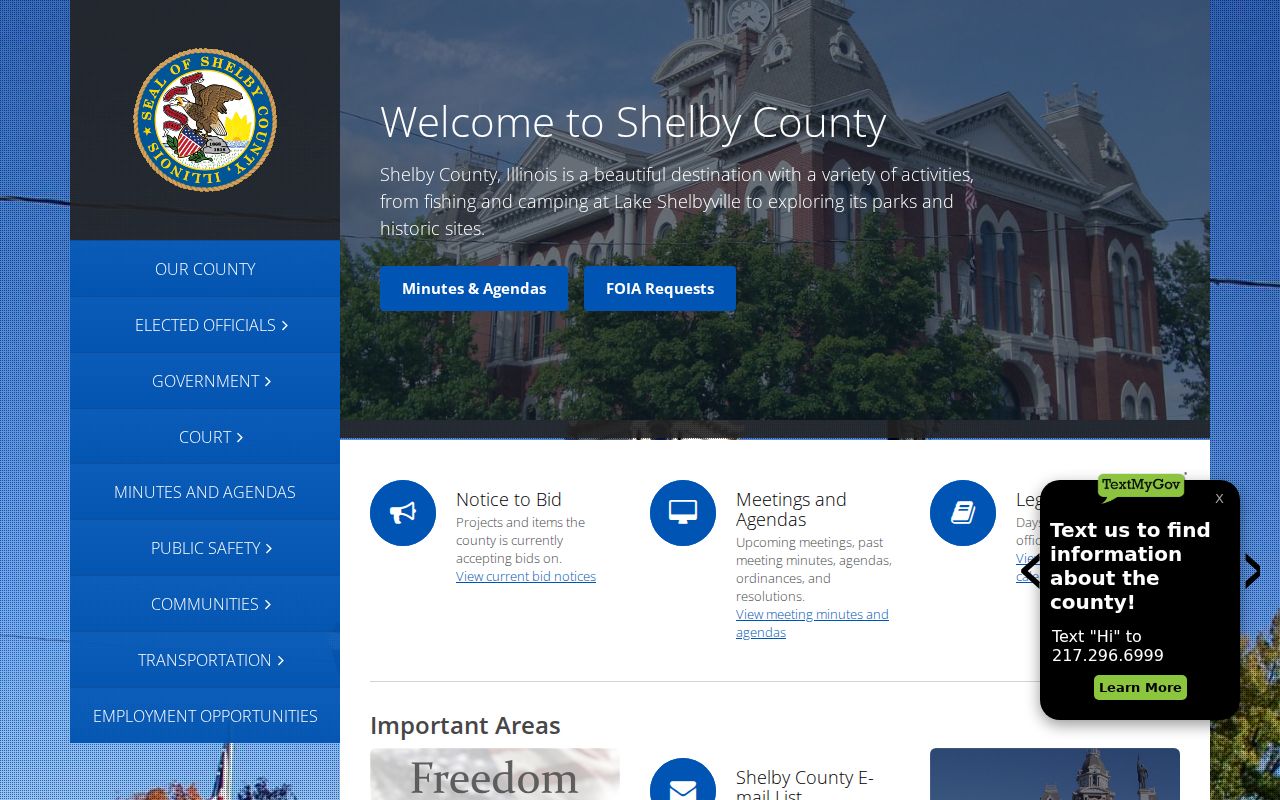
That directory is a routing tool, while the clerk, sheriff, or other originating agency remains the record custodian.
Three Shelby County Records
An arrest report, booking entry, and court case are not duplicate views of one database. The arresting agency records what officers investigated and why custody occurred. Jail staff record intake, property, charge and hold information, identity processing, housing, release, or transfer. If the State's Attorney files a prosecution, the Shelby County Circuit Clerk opens a case and records pleadings, hearings, orders, disposition, sentence, and financial entries.
| Record | Local custodian | Best use |
|---|---|---|
| Incident or arrest report | Arresting police agency | Event narrative and initial allegation |
| Booking or custody entry | Sheriff and detention center | Intake, local custody, release, or transfer |
| Circuit court file | Shelby County Circuit Clerk | Filed charge, docket, judgment, and sentence |
| State conviction response | ISP Bureau of Identification | Identity-linked Illinois conviction information |
These sources can differ without any one being false. A booking may precede filing, a prosecutor may change a count, or a disposition may not yet be linked to the state arrest cycle.
Official Illinois Background Checks
The Illinois State Police Bureau of Identification maintains the central repository. Its Uniform Conviction Information Act product disseminates qualifying conviction information. The Criminal History Information Response Process, known as CHIRP, handles name-based inquiries, but it is not an anonymous public search box. The web channel requires an account, enhanced authentication, and an ISP user agreement. A name inquiry can also confuse people who share biographical details.
Fingerprint submissions use Illinois-licensed live-scan vendors. For review of your own record, the ISP Access and Review process is the stronger identity route and has no ISP processing fee, though a vendor may charge to capture prints. Save the Transaction Control Number. It helps connect the submission and may be needed for a resubmission.
The ISP criminal-history overview explains the scope of the state response.
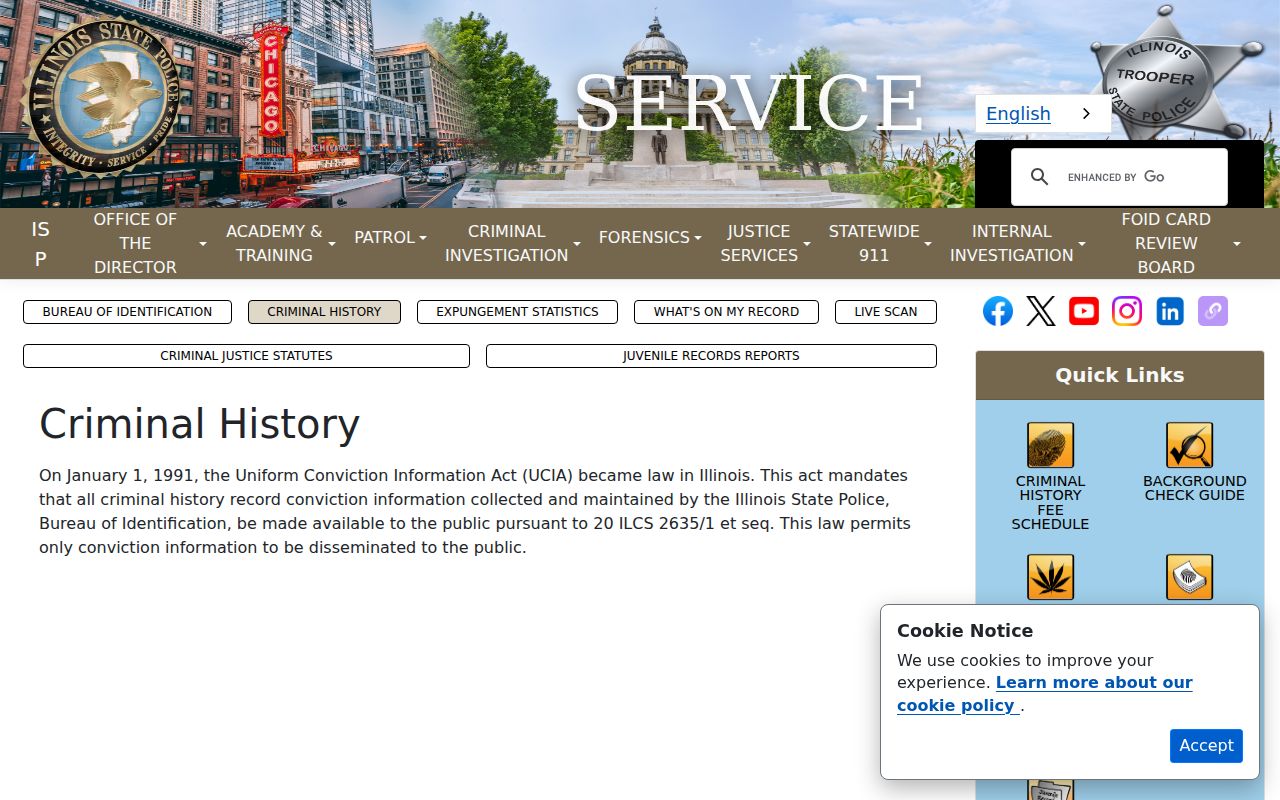
The state response is not the full Shelby County court file and does not automatically include the sex offender registry.
CHIRP Fees and Identity
ISP publishes separate manual and electronic processing fees. These figures come from the official fee schedule captured in the Shelby County research and do not include a live-scan vendor's own rolling or transmission charge. Confirm the current amount before submitting because the live schedule controls.
| ISP submission | Manual | Electronic |
|---|---|---|
| UCIA name inquiry | $16 | $10 |
| UCIA fingerprint card | $20 | $15 |
| Combined Illinois and FBI check | $32 | $27 |
| Illinois Access and Review | No ISP fee | No ISP fee |
| Court order to expunge or seal | $60 processing fee | Not listed |
The official CHIRP portal is the entry point for enrolled users.
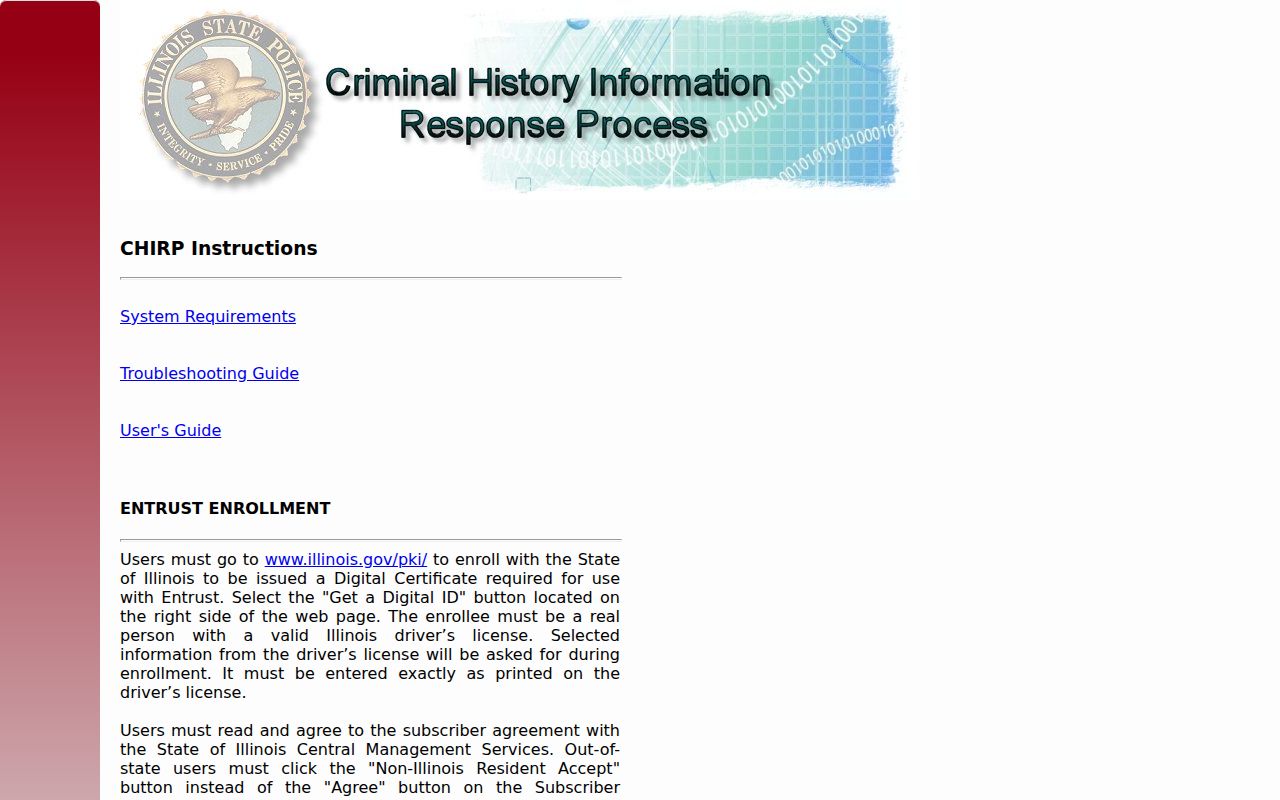
Account controls at the portal are a key reason not to describe CHIRP as a free open name lookup.
Types of Criminal Records in Shelby County
Shelby County criminal records are divided by the act that creates them. Police keep incident and arrest reports. The detention center creates bookings. The State's Attorney files complaints, informations, or indictments, and the clerk maintains them in the court file. Judges issue warrant orders, while law enforcement confirms and serves them. Shelby County Probation manages court-ordered local supervision; IDOC manages state custody and post-prison supervision.
- Arrest and booking records: show an alleged event and custody, not guilt.
- Criminal court files: show the filed charge, docket, plea, judgment, and sentence.
- ISP histories: connect reported Illinois arrest cycles with qualifying outcomes.
- Warrant records: begin with a judicial order and require current confirmation.
- Custody and supervision records: are split among the county jail, probation office, and IDOC.
Registry data is another distinct product. It gives statutory public-notification details for people required to register, not a complete criminal-history report.
Judici and the Third Floor
The Shelby County Circuit Clerk is on the third floor of the courthouse at 301 E. Main Street in Shelbyville. The office is open Monday through Friday from 8:00 a.m. to 4:00 p.m. and can be reached at 217-774-4212. Judici reports Shelby County online coverage from 1988. That date matters: older material, documents not displayed online, and certified copies may require staff help.
The best search key is a full case number. A party-name search is useful when the number is unknown, but the result still needs identity checks. The Illinois Courts courthouse directory links the official online-record route and visitor resources.
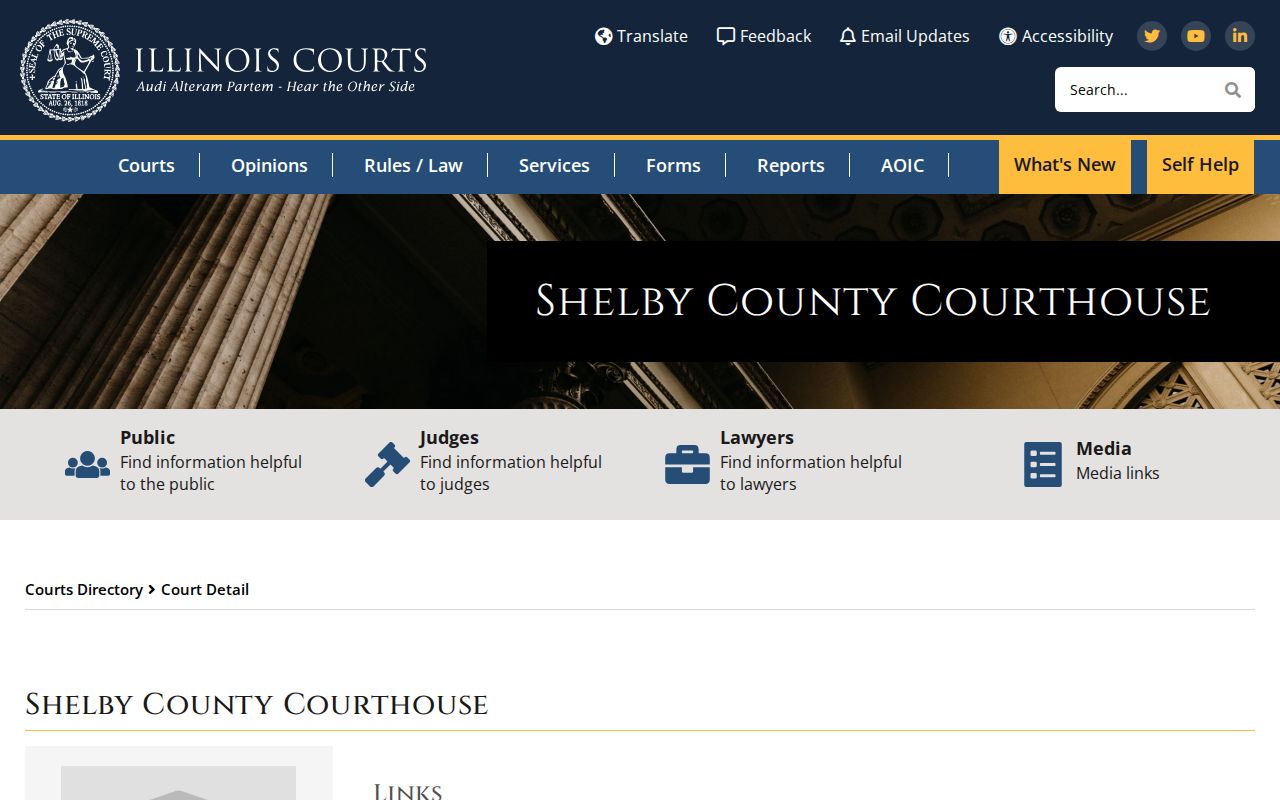
The directory also confirms free parking, an e-filing kiosk, a law library, and device rules, but the clerk remains the source for copies and access decisions.
What a Shelby County Criminal Record Shows
The fields depend on the product. A Shelby County court file focuses on one case. A booking file focuses on one custody event. An ISP transcript groups identity and fingerprint-supported arrest cycles. Protected identifiers, victim data, juvenile information, or sealed material may be omitted or redacted.
| Name and identifiers | Legal name, aliases, limited birth data, physical descriptors, SID or FBI numbers when the product permits them. |
|---|---|
| Arrest and booking data | Date, arresting agency, tracking or booking number, initial charges, holds, and release or transfer. |
| Charges and statutes | Offense description, Illinois citation, count, and felony or misdemeanor class. |
| Disposition | Pending, conviction, dismissal, acquittal, supervision, nolle prosequi, or another court-specific result. |
| Sentence | Custody, probation, conditional discharge, fine, restitution, assessments, and concurrent or consecutive terms. |
| Custody or supervision | County custody, IDOC status, probation, parole, or mandatory supervised release where publicly reported. |
Read the event dates and source labels with each field. A balance does not establish custody, and an initial charge does not establish a conviction.
Custody Before and After IDOC
The Shelby County Detention Center at 151 N. Morgan Street handles local intake and county detention. No official public inmate roster was found, so current-custody questions begin by calling 217-774-3941. VINELink can add notification, but it does not replace the jail's own record. After a sentenced transfer to state custody, use the Illinois Department of Corrections Individual in Custody Search. Federal custody requires the Bureau of Prisons locator.
The VINELink service supplies a supplemental custody-notification path.
A no-match there should lead back to the jail, the arresting agency, the clerk, or IDOC based on the expected stage.
The IDOC offender search gateway separates state custody and supervision searches.
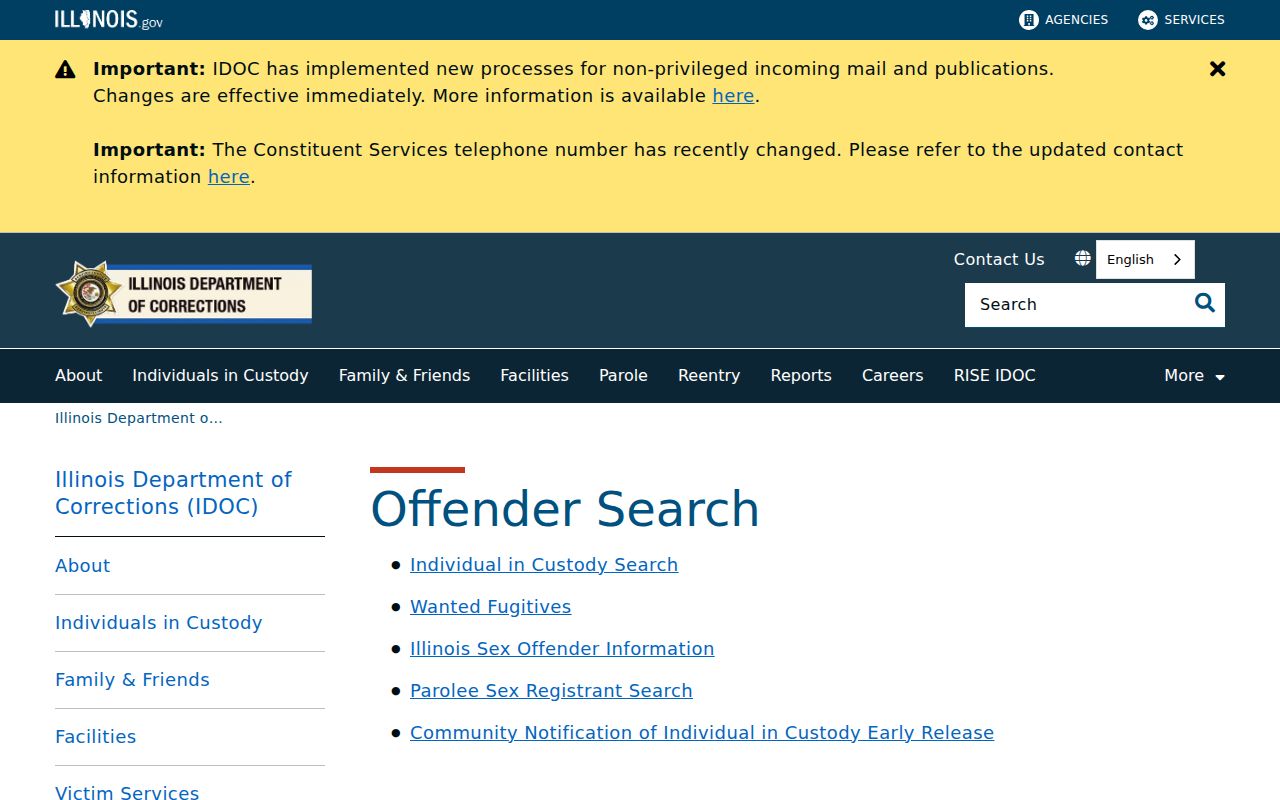
IDOC does not serve as the roster for people held only at the Shelby County jail.
Public Access Laws for Shelby County Criminal Records
Illinois FOIA covers records of executive-branch public bodies, including releasable sheriff or city records, but the judicial branch is excluded from the Act's definition of a public body. Shelby County court files are requested through the Circuit Clerk and judiciary access rules. Other statutes govern state conviction information, record relief, and registry publication.
Key Illinois laws:
5 ILCS 140 makes public-body records open unless an exemption or confidentiality law applies.
20 ILCS 2635 governs public dissemination and correction of Illinois conviction information.
20 ILCS 2630/5.2 sets adult expungement and sealing procedures.
730 ILCS 152 governs public sex-offender notification.
The county FOIA page explains the local public-record framework.
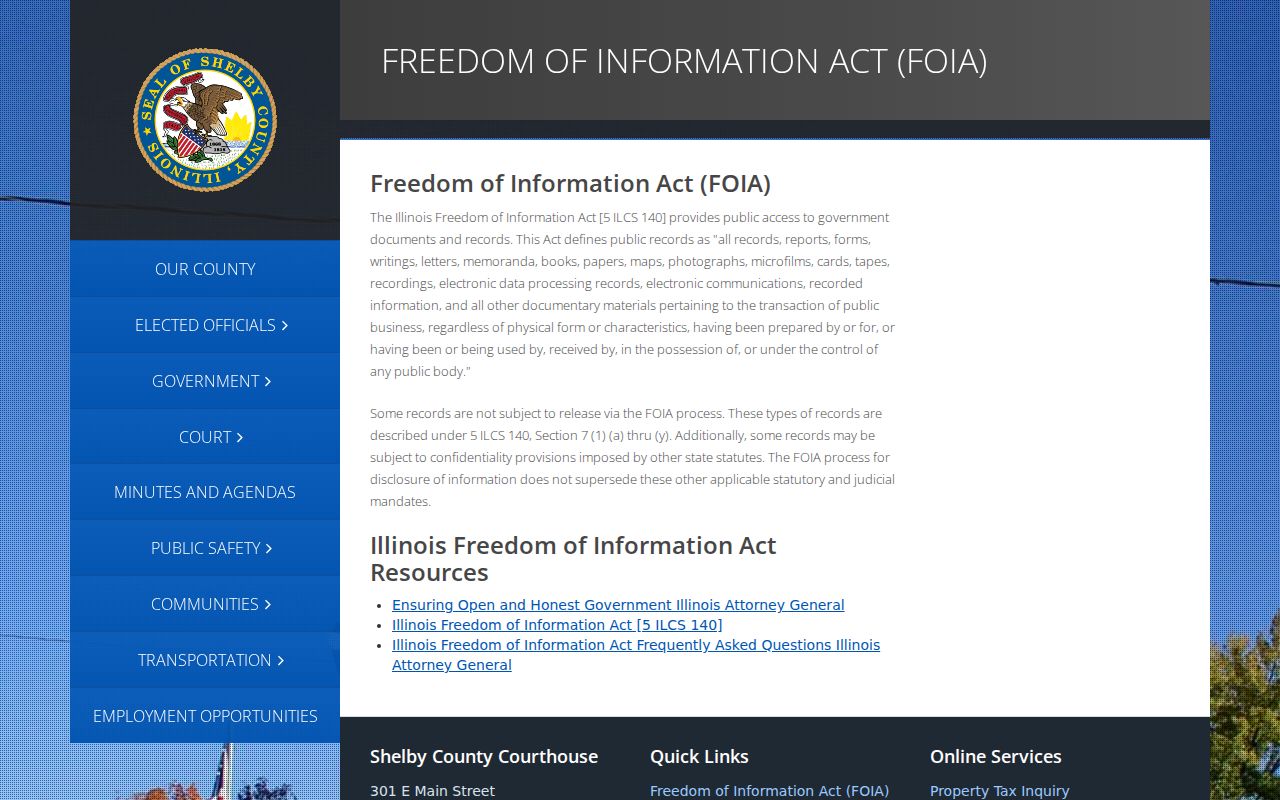
A focused request should name the agency, date range, location, and record type, and ask for segregable nonexempt portions when redaction is needed.
No Public Shelby Warrant Database
Shelby County does not publish a verified public warrant list or anonymous warrant search. A person concerned about their own status should call the Sheriff's Office at 217-774-3941 and search the related court case through Judici or the Circuit Clerk. A docket may show that a warrant was issued or quashed, but absence from the visible docket is not proof that no active or sealed warrant exists.
Arrest warrants authorize custody, bench warrants often follow a missed court duty, and search warrants authorize a search. They are not interchangeable. Confirm the issuing court, case number, current order, and any required appearance. Paying an online balance does not by itself prove a warrant has cleared from both court and law-enforcement systems.
Sealed, Expunged, and Restricted Records
Illinois uses both expungement and sealing under 20 ILCS 2630/5.2. Expungement generally removes or destroys eligible records as the order directs. Sealing keeps an eligible record from ordinary public view while preserving access allowed by law. Eligibility turns on the precise charge, outcome, sentence, registration duties, and waiting period, so broad claims that all misdemeanors seal or no felonies seal are unsafe.
Statewide mandatory forms are available from the Illinois Courts expungement and sealing page.
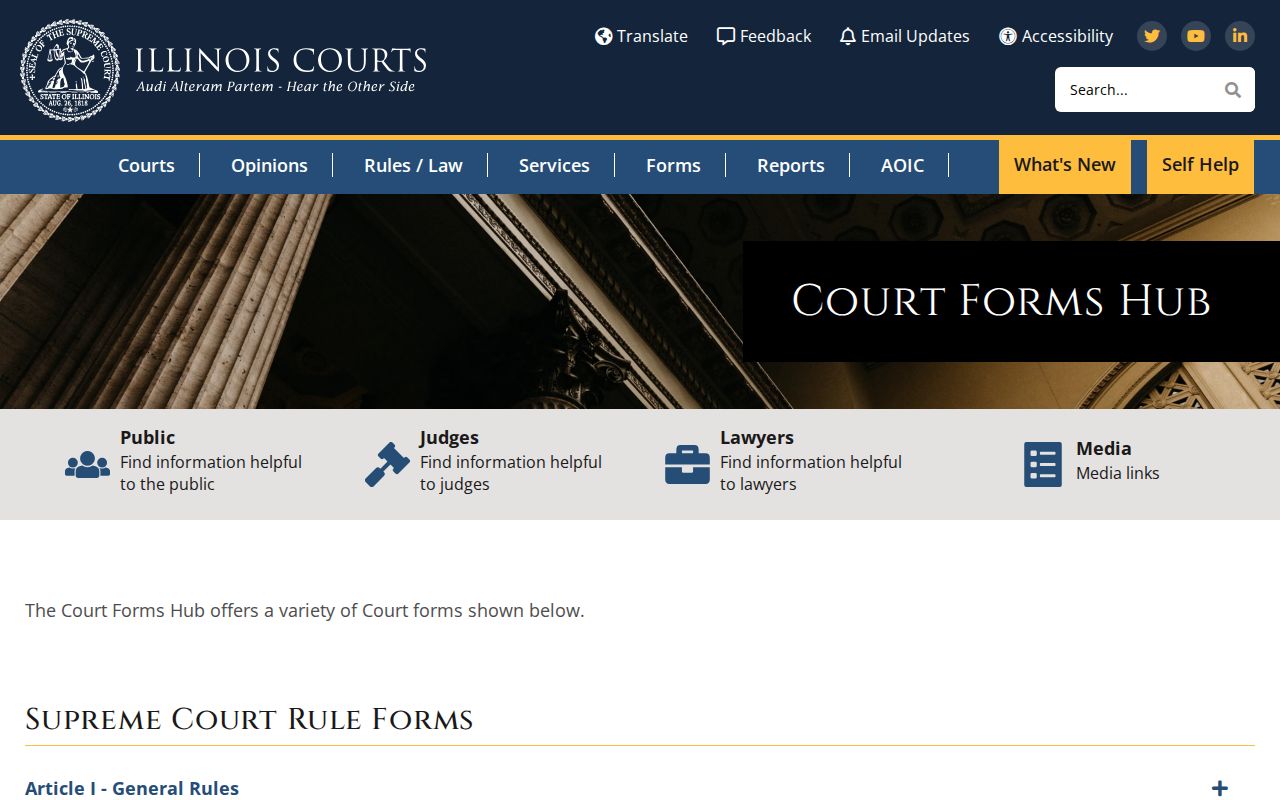
For Shelby County matters, file with the Circuit Clerk and keep a file-stamped copy. Records from other counties may require separate filings there.
Correcting an Illinois History
A missing or wrong disposition in an ISP record should be checked against the Shelby County court file. Start with ISP Access and Review so fingerprints identify the state transcript attributed to you. Then request the official disposition or amended order from the Circuit Clerk. The ISP challenge channel can use that source record to correct the linked arrest cycle, charge, outcome, or identity information.
- Disposition
- The formal result of a charge, such as conviction, dismissal, or acquittal.
- Nolle prosequi
- The prosecutor stopped pursuing that charge at that time; it is not an acquittal.
- Court supervision
- An Illinois outcome that may withhold a judgment while conditions are completed.
- Sealing
- A limit on ordinary public access, not destruction of every government record.
An online no-result should not be treated as proof that no event ever occurred. Coverage dates, spelling, delayed reporting, jurisdiction, sealing, and expungement can all affect visibility.
Shelby County Record Offices
The courthouse puts several justice offices under one roof, but each has a separate role. Court copies go to the Circuit Clerk. The State's Attorney handles prosecution, while the Public Defender handles court-appointed defense. Probation manages local court supervision. The Sheriff and detention operation remain at North Morgan Street for sheriff reports and local custody.
Circuit Clerk
301 E. Main Street, third floor
Shelbyville, IL 62565
217-774-4212
Monday-Friday, 8:00 a.m.-4:00 p.m.
Sheriff and Detention
151 N. Morgan Street
Shelbyville, IL 62565
217-774-3941
Call before visiting for records or custody questions.
Probation
301 E. Main Street, first floor
Shelbyville, IL 62565
217-774-2412
Local court-ordered supervision.
Using the right counter prevents a police-report request from being sent to the clerk or a court-copy request from being sent to the jail.
Criminal Records by City in Shelby County
City police reports remain with the agency that created them, even when a later booking or criminal case moves into a Shelby County system. Shelbyville, Moweaqua, and Windsor use different local contact routes. None has a separate municipal criminal-court portal identified in the official research, so filed cases route to the circuit court.
Shelbyville Criminal History
Population 4,674. City police reports, sheriff bookings, and courthouse files remain separate.
Moweaqua Criminal History
Population 1,764. The village provides an online public-information request route.
Windsor Criminal History
Population 1,079. Direct city contact and FOIA are the police-record fallbacks.
Shelbyville Is the Records Hub
Shelbyville is both the county seat and the largest incorporated place in Shelby County. The courthouse, Sheriff's Office, detention center, State's Attorney, Public Defender, and Probation Office are all located there. That compact geography can be useful for an in-person search, yet it does not merge city, county, court, and state custody.
The official Shelbyville gateway supplies city context and municipal contacts.
A Shelbyville mailing address does not prove that city police made an arrest. Check the agency shown on the report, booking entry, or court docket.